
Injection Molding Materials and Part Finishes
We help teams translate product requirements into a grade-level material and finish discussion, while keeping appearance, molding behavior, compliance and availability visible.
A Polymer Family Is Not a Complete Material Specification
ABS, PP or PC identifies a broad family, not the exact performance, color, additives, shrinkage, regulatory status or supply route. The selected manufacturer and grade should be recorded before tool and process decisions are treated as final. When a grade is not yet selected, we work from the application requirements and clearly label assumptions.
| Material family | Common decision themes | Review cautions |
|---|---|---|
| ABS | General housings, appearance, toughness and finishing | Grade, chemical exposure, UV need, plating/painting intent and flame rating |
| PP and PE | Low density, chemical resistance, living hinges or flexible behavior depending on grade | Shrinkage, warpage, bonding/printing difficulty and temperature needs |
| PC and PC blends | Impact, rigidity, transparency or heat performance depending on grade | Drying, chemical stress, optical needs, UV and exact blend |
| PA (nylon) | Strength, wear and heat performance, including reinforced grades | Moisture conditioning, fiber orientation, shrinkage and dimensional change |
| POM | Low friction, wear, stiffness and dimensional function | Geometry, venting, environment, joining and grade restrictions |
| TPE and TPU | Flexible parts, grips, seals and overmold applications | Hardness, compression behavior, exact substrate bond and chemical exposure |
| PEEK and other higher-performance grades | Demanding thermal, chemical or mechanical applications | Exact grade, processing route, tooling, material cost and validation require dedicated review |
This comparison is orientation, not a material recommendation. Manufacturer technical data, regulatory documentation and representative tests control the final decision.
Filled, Transparent and Special-Requirement Grades
Glass-Fiber Filled
Fiber can increase stiffness and alter shrinkage, warpage, flow, surface, weld behavior and directional properties. It can also increase wear considerations for the tool.
Talc, Mineral and Other Fillers
Fillers may change stiffness, dimensional response, density, surface and processing. Percentage and grade—not the filler name alone—control the real behavior.
Transparent, Flame-Rated, Chemical or Outdoor Grades
Optical defects, UV exposure, additives, stress cracking, official flammability listing and chemical contact require exact grade data and application validation.
Finish and Appearance Options
Molded Surface
Polished, matte or textured intent begins with tool-surface planning. SPI-style polish references or another named appearance standard must be paired with an agreed location and comparator; draft, material, gate flow, weld regions and ejector evidence affect the result.
Color
Masterbatch, pre-colored resin and visual standards require grade compatibility, approved reference, lighting and variation expectations.
Post-Mold Finish
Printing, marking, painting or other specialist work must be confirmed by project and may use an evaluated partner route.
Material-Selection Input Checklist
- Use temperature and duration
- Mechanical loads and impact
- Chemical and cleaning exposure
- Outdoor or UV exposure
- Flammability or other regulatory need
- Color, gloss and texture
- Dimensional stability and moisture
- Wear and friction
- Bonding, welding or marking
- Approved-source requirements
- Recycled-content or sustainability target
- Material certificate or traceability need
Independent Reference Tools
Use official or manufacturer data for grade selection. Relevant starting points include UL Prospector for materials data and ISO 20457:2026 for molded-plastic-part tolerance terminology and conditions.
These external resources do not constitute certification, approval or a promise by CustomMoldHub.
Manufacturing Context
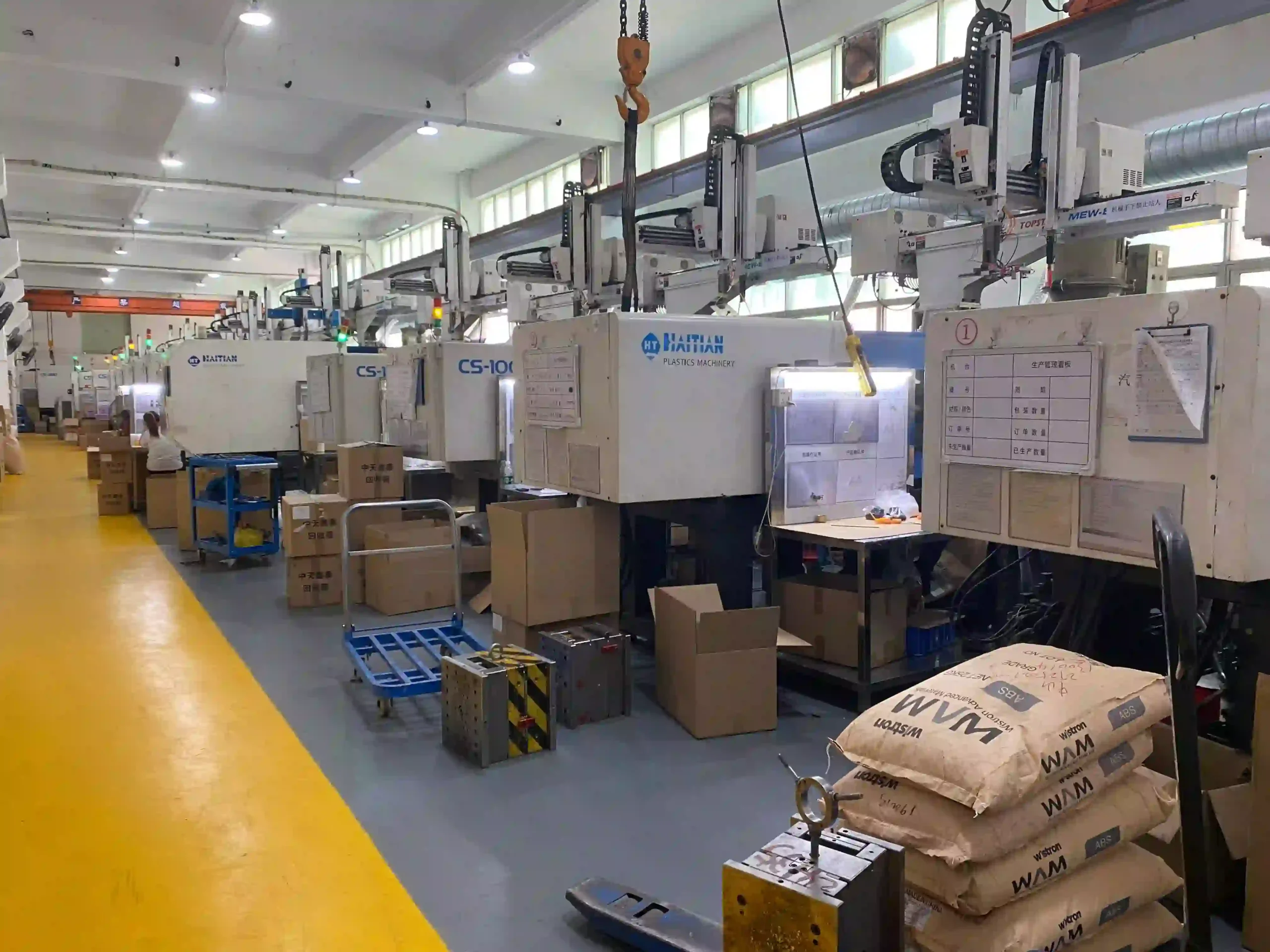
These images are existing company-owned website assets. They are used as manufacturing context, not as proof of an unlisted machine count, tolerance or certification.
Frequently Asked Questions
We can help narrow the discussion, but final selection should use exact grade data, applicable regulations, design analysis and representative testing. The customer approves the product material.
Certificate and traceability requirements must be specified before quotation and order. Availability and document type depend on the exact material source and agreed supply chain.
A photo is not a controlled color standard. A physical or specified digital standard, resin/texture context, lighting and acceptance method are needed for meaningful approval.
Last reviewed and updated: August 27, 2026. Scope, documentation, production location and commercial terms are confirmed in the written quotation for each project.
Define the Material by What It Must Do
Share the use environment, performance risks, exact standards and appearance expectations so grade-level options can be reviewed.