
Secondary Operations and Assembly for Molded Plastic Parts
We can review downstream requirements such as trimming, machining support, inspection and assembly as part of a controlled project scope, with other processes confirmed case by case.
A Molded Part May Not Be the Final Deliverable
Many programs require a controlled operation after molding: gate or flash cleanup, hole or feature machining, insertion of hardware, joining, inspection, labeling or protective packaging. These steps change cost, datums, appearance, traceability and failure modes, so they should be evaluated during quotation—not added as an informal production instruction.
| Operation | Current positioning | Scope questions |
|---|---|---|
| Trimming and basic handling | Can be reviewed as a direct part of molded-part supply | Acceptable witness, edge condition, visual standard and inspection method |
| CNC or drilling support | Available for project review | Datum after molding, fixture concept, burrs, chips, tolerance and measurement |
| Component assembly | Available when method and acceptance are defined | BOM, component supply, orientation, torque/force, error proofing and functional check |
| Printing, laser marking, welding, painting or specialty finish | Confirmed case by case; may involve an evaluated partner | Artwork, material compatibility, cosmetic standard, adhesion, durability and source control |
| Inspection and packaging | Defined according to the agreed part and shipment risk | Sampling, records, protection, label, count and final logistics |
Design for the Downstream Operation
Reference Datums
A molded surface may shift or distort. Machining and inspection need a datum strategy that reflects real part behavior.
Assembly Variation
Part, purchased-component and fixture tolerances combine. Define the functional result and mistake-proofing need.
Cosmetic Protection
Each handling and transport step can mark a surface. Appearance zones and packaging controls should be visible to operators.
Quotation Inputs
- Finished-part drawing
- Assembly BOM and approved components
- Work instruction or functional objective
- Cosmetic and defect criteria
- Marking artwork and revision
- Torque, force, leak or function test
- Packaging and labeling specification
- Lot or serial traceability need
- Quantity and batch pattern
- Required records and retention
Acceptance Is Defined at the Finished State
The output may be a molded component, a machined component or an assembly. The drawing and purchase documents should clearly identify which state is being accepted.
See quality planning for inspection scope and production molding for the upstream baseline.
Manufacturing Context
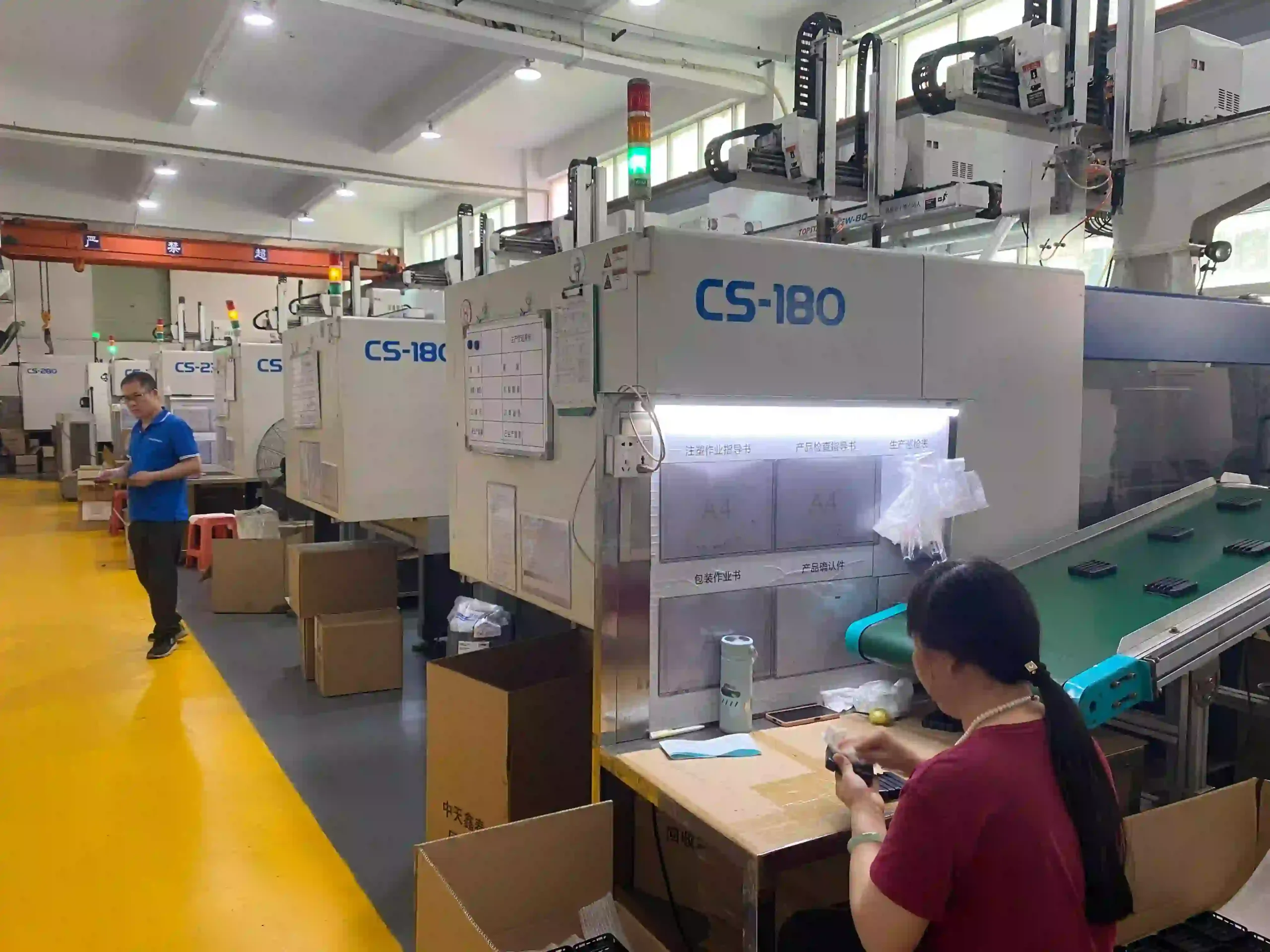
These images are existing company-owned website assets. They are used as manufacturing context, not as proof of an unlisted machine count, tolerance or certification.
Frequently Asked Questions
No blanket claim is made. Trimming, machining support, inspection and assembly can be reviewed; specialty processes may use a separately evaluated route. The quotation confirms the source and responsibility.
Potentially. Supply condition, incoming acceptance, shortages, scrap responsibility, replenishment and traceability must be agreed first.
Some machined features may be controlled differently, but feasibility depends on molded-part stability, datums, fixturing, geometry and measurement. The specific tolerance must be reviewed.
Last reviewed and updated: August 27, 2026. Scope, documentation, production location and commercial terms are confirmed in the written quotation for each project.
Quote the Finished Deliverable
Send the final drawing, BOM, operation requirements and acceptance method—not only the molded-part CAD.