
Insert Molding and Overmolding Engineering Support
Insert and multi-material programs are reviewed around retention, sealing, adhesion, shutoffs, part handling, dimensional stack-up and the realities of the proposed process.
The Interface Is the Product
For insert molding, the inserted component must be located, retained and protected while plastic flows and shrinks around it. For overmolding, the substrate and second material must work together mechanically or chemically under the intended use. Geometry, surface condition, temperature, contamination, material compatibility and handling can all change the result.
Insert Definition
Confirm material, finish, dimensional variation, cleanliness, orientation, incoming condition and responsibility for supply.
Retention and Shutoff
Review positive location, anti-rotation features, steel shutoffs, flash risk and the effect of insert variation.
Material Pair
Check grade-specific compatibility, adhesion expectation, shrinkage, temperature exposure and use environment.
Handling Concept
Define manual or automated loading expectations, mistake-proofing, substrate condition and damage risks.
Parting and Venting
Identify seals, witness lines, trapped gas, thin edges and areas where flash or burn marks would affect use.
Inspection
Connect bond, pull, torque, leak, position, appearance or dimensional checks to the actual failure modes.
Common Program Patterns and Validation Risks
Threaded or Structural Inserts
Location, anti-rotation, pull-out or torque requirement, flash control and insert variation must be linked to a defined test.
Electrical or Sealing Inserts
Continuity, isolation, sealing, component protection and molding temperature may control the design and handling method.
Soft-Touch or Seal Overmolds
Coverage thickness, edge shutoff, bond, hardness, wear and chemical exposure determine whether the grade pair and geometry are appropriate.
Sample validation can include dimensional, appearance, assembly and agreed functional tests. Pull-out force, torque, leak, adhesion or environmental testing is only meaningful when the fixture, condition, sample plan and acceptance limit are defined.
Insert Molding Versus Overmolding
| Program type | Typical focus | Information needed |
|---|---|---|
| Metal or component insert molding | Location, retention, flash control, electrical or mechanical function and insert variation | Insert drawing, material/finish, supply form, tolerances, load and test needs |
| Plastic-substrate overmolding | Substrate stability, bonding, deformation, sealing and datum control | Both material grades, substrate process/history, use environment and bond expectation |
| Soft-touch overmolding | Feel, adhesion, edge shutoff, cosmetic flow and wear | Hard/soft grade pair, hardness target, texture, chemical exposure and validation method |
What to Send
- Complete assembly and component CAD
- Insert or substrate drawing
- Exact grades and surface conditions
- Bonding or retention target
- Environmental exposure
- Critical seals and appearance zones
- Loading orientation and supply format
- Functional validation method
- Quantity assumptions
- Any prior failure evidence
Capability Boundary
Part loading and process sequence are selected by project. We do not imply that every insert geometry, material pair or automation concept is automatically feasible.
Start with DFM, compare exact grades on Materials and Finishes, and define validation on Quality Assurance.
Manufacturing Context
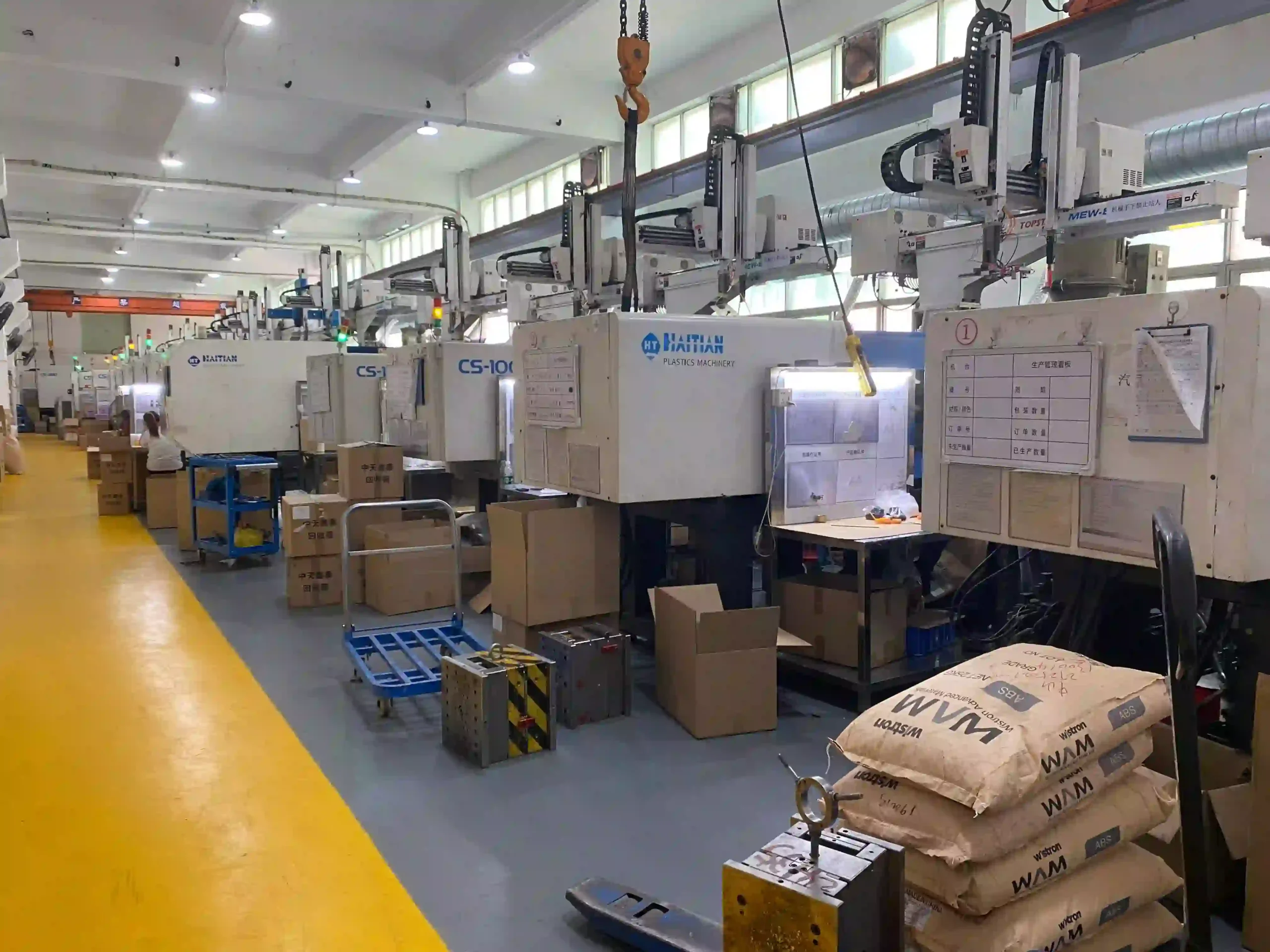
These images are existing company-owned website assets. They are used as manufacturing context, not as proof of an unlisted machine count, tolerance or certification.
Frequently Asked Questions
No. Adhesion depends on the exact grades, substrate condition, geometry, process and environment. Supplier compatibility guidance and representative trials may be needed.
Potentially. The quotation should define supply responsibility, incoming condition, packaging, traceability, dimensional control, scrap responsibility and replenishment terms.
Not always. The loading method depends on insert size, orientation, cycle needs, quality risk, quantity and investment. The project review determines a suitable concept.
Last reviewed and updated: August 27, 2026. Scope, documentation, production location and commercial terms are confirmed in the written quotation for each project.
Review the Interface Before Tooling
Share both components, exact materials and the performance test that defines a successful bond or retained insert.