
Prototype and Bridge Tooling for Injection-Molded Parts
We help teams compare prototype, bridge and production-tooling choices according to the decision the parts must support—not by applying one “rapid” label to every project.
Select the Tooling Path From the Learning Objective
Prototype and bridge tooling can reduce commitment while a design, market or demand plan is still developing. It is not automatically the fastest or lowest-cost option, and it should not be represented as production-equivalent unless construction, resin, process and acceptance conditions support that conclusion.
| Path | Best used when | Questions to close |
|---|---|---|
| Prototype tooling | The team needs molded-material learning, fit checks or design evidence with controlled expectations | How many design loops, what part evidence, and what tool limitations are acceptable? |
| Bridge tooling | Interim demand or launch learning must be supported while the long-term path develops | What quantity range, change likelihood, maintenance plan and transition trigger apply? |
| Production tooling | The design, material, demand and validation plan are mature enough for a longer-term investment | What construction, acceptance, ownership and production responsibilities are required? |
Compare the Part-Making Routes
| Route | Useful for | Important limitation |
|---|---|---|
| 3D printing | Fast geometry learning, fit models and some functional prototypes | Material, anisotropy, surface and feature behavior may not represent injection molding |
| CNC machining | Machined prototypes in selected stock materials and controlled features | Machined grain, corners, wall strategy and cost do not reproduce molded flow or shrinkage |
| Prototype injection tooling | Molded-material, process and assembly learning under a defined tool scope | Tool construction and expected use may limit design, resin, changes or repeat demand |
| Bridge tooling | Interim supply and launch learning before the long-term route is settled | Capacity, maintenance and transition triggers must be planned |
| Production tooling | A mature design and demand case requiring a defined long-term manufacturing plan | Higher commitment makes input and design closure especially important |
No route is universally “rapid.” Geometry, material, evidence, quantity and revision risk determine the responsible choice.
Questions We Use to Prevent a False Shortcut
What must the parts prove?
Appearance, fit, assembly, resin behavior, process concept and regulatory testing require different evidence. The tool should support the intended decision.
What may still change?
Identify likely geometry, insert, gate, finish or material revisions and decide how the tool can accommodate—or cannot accommodate—them.
What happens after the bridge?
Define whether the tool may continue, be modified, be retired or transfer learning into a separate production tool.
Scope Checklist
- Decision the molded parts must support
- Current CAD and expected revision window
- Required resin and color
- Sample quantity by revision
- Dimensions or tests to report
- Tool-life expectation stated as a project requirement
- Expected interim or annual demand
- Future production-tool strategy
- Ownership and shipping expectation
- Known cosmetic and assembly risks
Fit Boundary
This service works when the learning objective and limitations can be written down. If the parts must immediately meet a mature high-volume validation plan, a direct production mold may be the more responsible path.
Use DFM to identify design and tooling risks before selecting the route.
Manufacturing Context
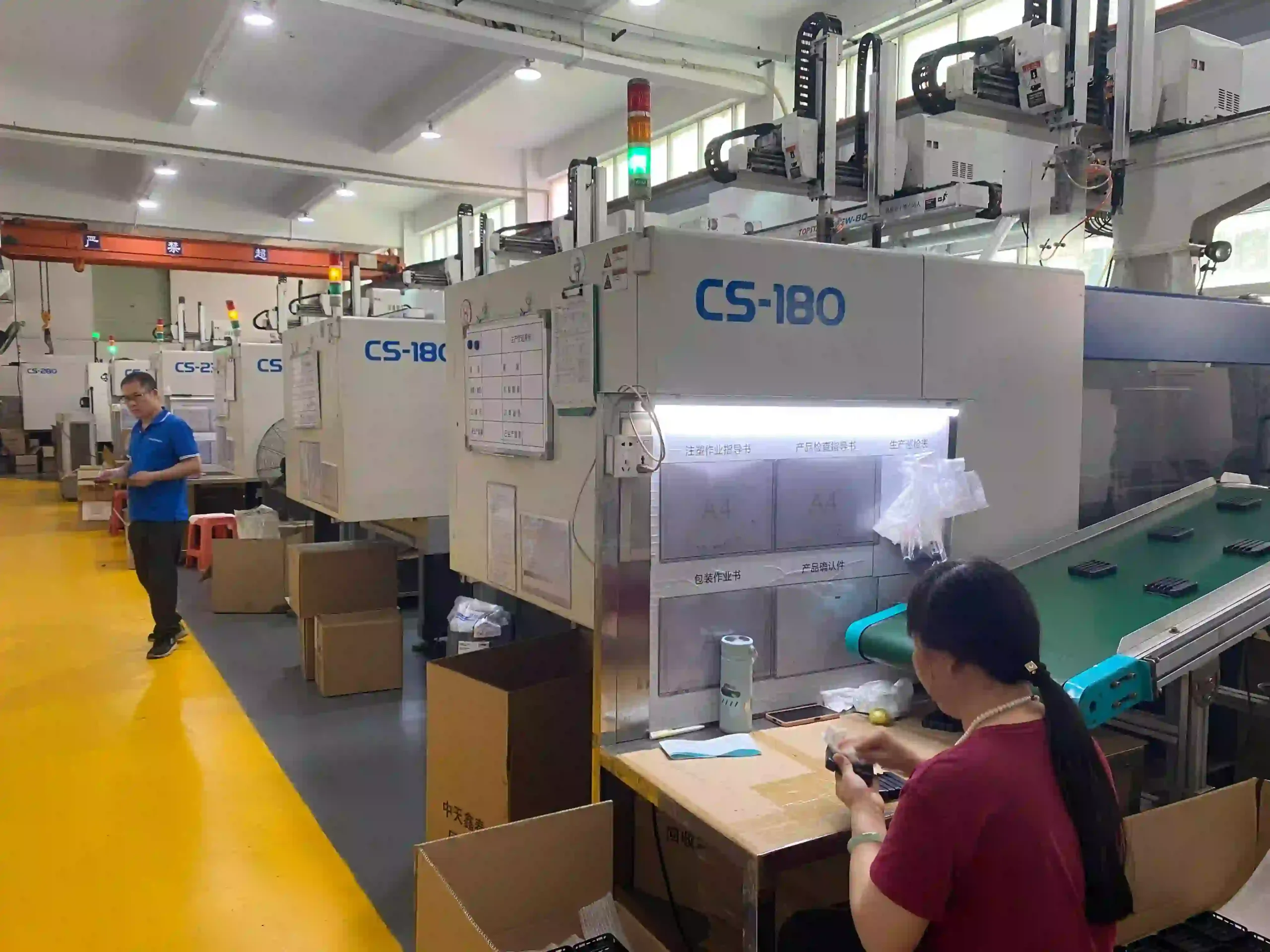
These images are existing company-owned website assets. They are used as manufacturing context, not as proof of an unlisted machine count, tolerance or certification.
Frequently Asked Questions
No. Tool material and construction are selected for the part, resin, required evidence, expected use and change plan. The quotation defines what is proposed instead of relying on the word prototype.
That depends on the approved material, process, validation, regulatory and commercial requirements. The team should define whether parts are for engineering evaluation, market use or released production.
Possibly, but not by assumption. The tool construction, condition, maintenance, capacity and acceptance plan must be reviewed against the future program.
Last reviewed and updated: August 27, 2026. Scope, documentation, production location and commercial terms are confirmed in the written quotation for each project.
Choose a Tooling Path That Matches the Decision
Tell us what the next molded parts must prove and what may still change.